Large Louis XVI wine ewers such as this are rare within Dutch silver. From the second half of the eighteenth century, only four large examples are known, all made in Amsterdam. The two largest of these were produced by the most prominent silversmith active in the city at the time: Johannes Schiotling. The remaining two were made by his contemporary Marthinus Logerath.
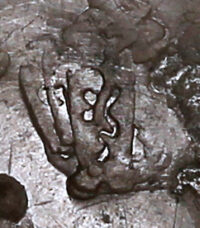
The elegant ewer stands on a circular foot with a smooth, vertical plinth, edged with a beaded border that is repeated in several places: at the upper edge of the foot, on the broad band encircling the body, and along the rim of the spout. Bold leaves are draped over the fluting of the foot and reappear on the knop and the angular handle. Both body and neck are embellished with fluting worked in repoussé, while the central band is enriched with finely chased bandwork and rosettes.
A Large Wine Ewer
Neoclassicism
This wine ewer is an outstanding example of the Neoclassical style, which came into fashion during the reign of Louis XVI and is therefore also known as the Louis Seize style. After the mid-eighteenth century, following the Rococo, a new movement emerged that reoriented itself towards classical antiquity. This classicism was marked by a scholarly engagement with ancient culture, coinciding with the birth of art history as a discipline.
The excavations at Pompeii in 1748 and at Herculaneum, conducted under the supervision of Charles of Bourbon, King of Naples, fuelled interest in classical forms and provided a major source of inspiration for Neoclassicism. Numerous publications appeared, including those by the German archaeologist and historian Johann Joachim Winckelmann, who meticulously documented the proportions and measurements of classical architecture. The abundance of detailed illustrations proved particularly influential within the decorative arts.
The ornamentation of this ewer exemplifies this stylistic vocabulary: beaded borders, acanthus leaves, a wreath of laurel leaves, fluting, and rosettes on the central band. Even the basic form closely recalls that of an ancient vase.
Wine
In 1787, the year in which this ewer was made, wine in the Netherlands was not an everyday drink. It was served at meals and receptions within regent families and prosperous burgher households, while for others it was largely reserved for special occasions; beer remained the everyday drink. As the Netherlands had no significant domestic wine production, it relied on imports, chiefly from France and Germany. German Rhine wines were considerably more expensive than French wines, which were therefore accessible to a wider public.
Schiotling
In the eighteenth century, prosperous and affluent Amsterdam was a magnet for silversmiths. Between 1760 and 1790, approximately ninety foreign silversmiths settled in the city. More than half of them originated from Scandinavia, Austria, Germany, East Frisia, the Rhineland-Westphalia region and the Baltic states. These craftsmen shared similar backgrounds and religious affiliations, married within each other’s families, and worked with or for one another.
The most prominent figure within this group was Johannes Schiotling, born in 1730 in Gothenburg, Sweden, the son of Sven Schiotling, a journeyman smith attached to the artillery, and Kerstin Andersdotter. At seventeen he entered an apprenticeship in his native city with Olof Fernlöf, one of Gothenburg’s leading silversmiths and a former head of the guild. After six years of training, Schiotling completed his journeyman’s examination in 1753 and, following approval of his masterpiece, began his career as a travelling journeyman on the path to mastership.
For the following nine years, Schiotling disappears from the records. It is assumed that during this period he worked as a travelling journeyman for various masters. In 1762 he reappears in Amsterdam, where he acquired citizenship as a silversmith—a prerequisite for admission to the guild. That same year, at the age of thirty-two, he was registered as a master. He established his workshop on the Egelantiersgracht and married Margaretha Sofia Jansen from East Frisia a year later.
A Large-Scale Enterprise
Two of his brothers-in-law, Johan Diederik and Jan Arend, joined the business: the former as a silversmith, the latter as a citizen. Wilhelmus Angenendt from Wesel became a master silversmith in 1770 and joined the workshop, as did Christoffel Mittscherlich from Reval (Tallinn), who became Schiotling’s right-hand man. Schiotling quickly became very successful. The scale and quality of his production testify to his excellent connections within Amsterdam’s regent patriciate. He worked on commission for the city’s wealthiest elite, including the banker John Hope, co-founder of the banking house Hope & Co. The firm also supplied church silver to several churches. In 1771, Schiotling was able to purchase a house on the prestigious Kalverstraat, where he also established a shop. In a declaration of 1798 he is described as a shop holder, indicating retail activity. The fact that he used three different maker’s marks further attests to the considerable scale of his enterprise.
Two Styles
Johannes Schiotling died in 1799, having been active for no fewer than fifty-one years. His long career encompassed multiple stylistic phases. During his first decade in Amsterdam, he worked in the Rococo style, which in Scandinavia had developed in an even more exuberant form than in its country of origin, France. This is evident in Schiotling’s lavish floral decoration and rocaille motifs, so profuse that they are sometimes described as foam collars. He later embraced the far more monumental Louis XVI style. As early as 1772 , columns and portrait medallions appear in his designs.
A Solo Exhibition
Important works by Schiotling are now held in museum collections, including the Rijksmuseum and the Amsterdam Museum. Johannes Schiotling remains the only silversmith to whom a dedicated exhibition was devoted at the Rijksmuseum, in 1977.